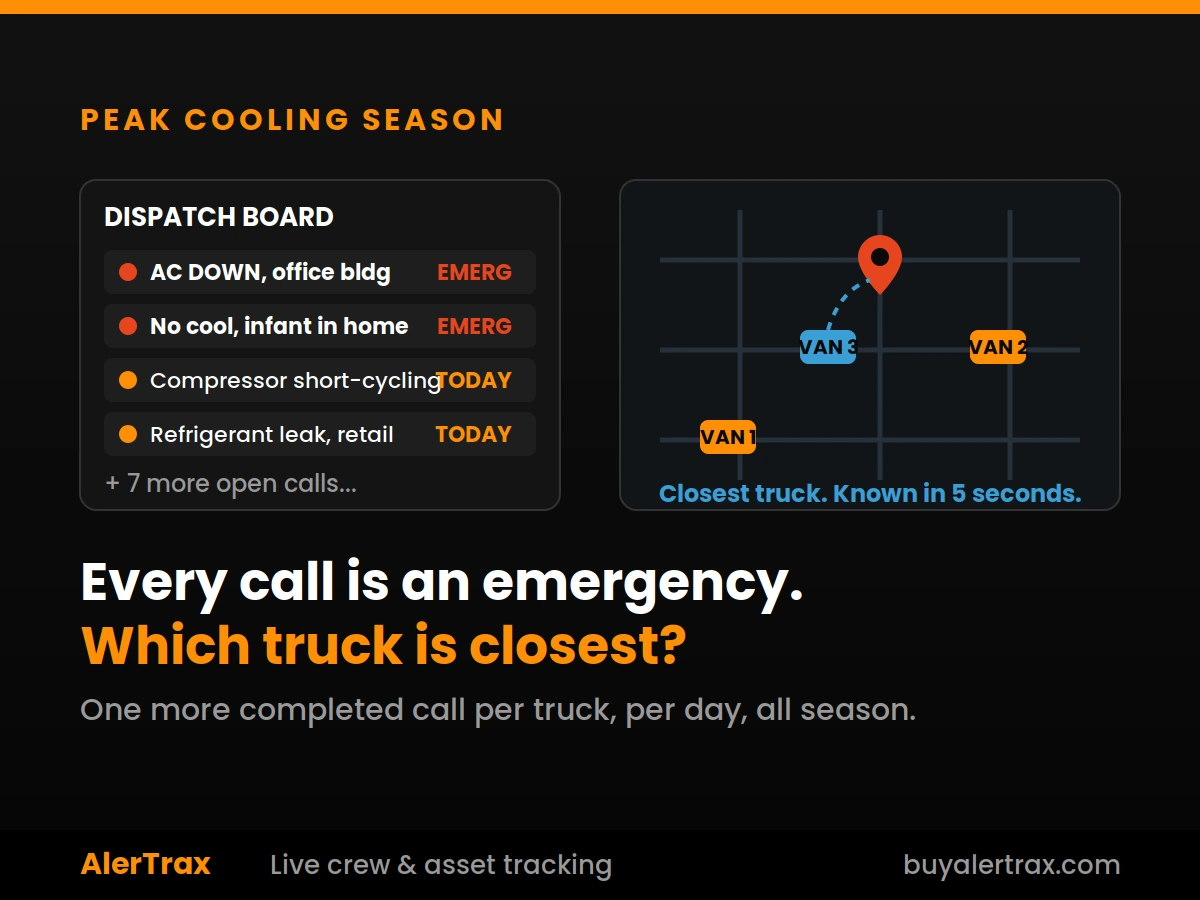
It is 2:40 on a July afternoon and the heat index is somewhere north of reason. Your dispatch board has been full since 8 AM. There are eleven open calls, four of them flagged emergency, and the phone is ringing again. A property manager wants to know when the tech is arriving at her office building, a homeowner with a baby in the house is asking if anyone is actually coming today, and you have a van somewhere on the north side that finished its last job, you think, maybe twenty minutes ago.
Every one of those callers has a system down on the hottest week of the year. Every one of them is an emergency to somebody. And the question that decides how your whole day goes is brutally simple: which truck is closest, and how fast can you know it?
This is the reality of peak cooling season. You cannot make the phone ring less, and you would not want to. The calls are the revenue. What you can control is how many of them each truck actually completes before dark, and that number is decided by a handful of small delays that most shops cannot even see.