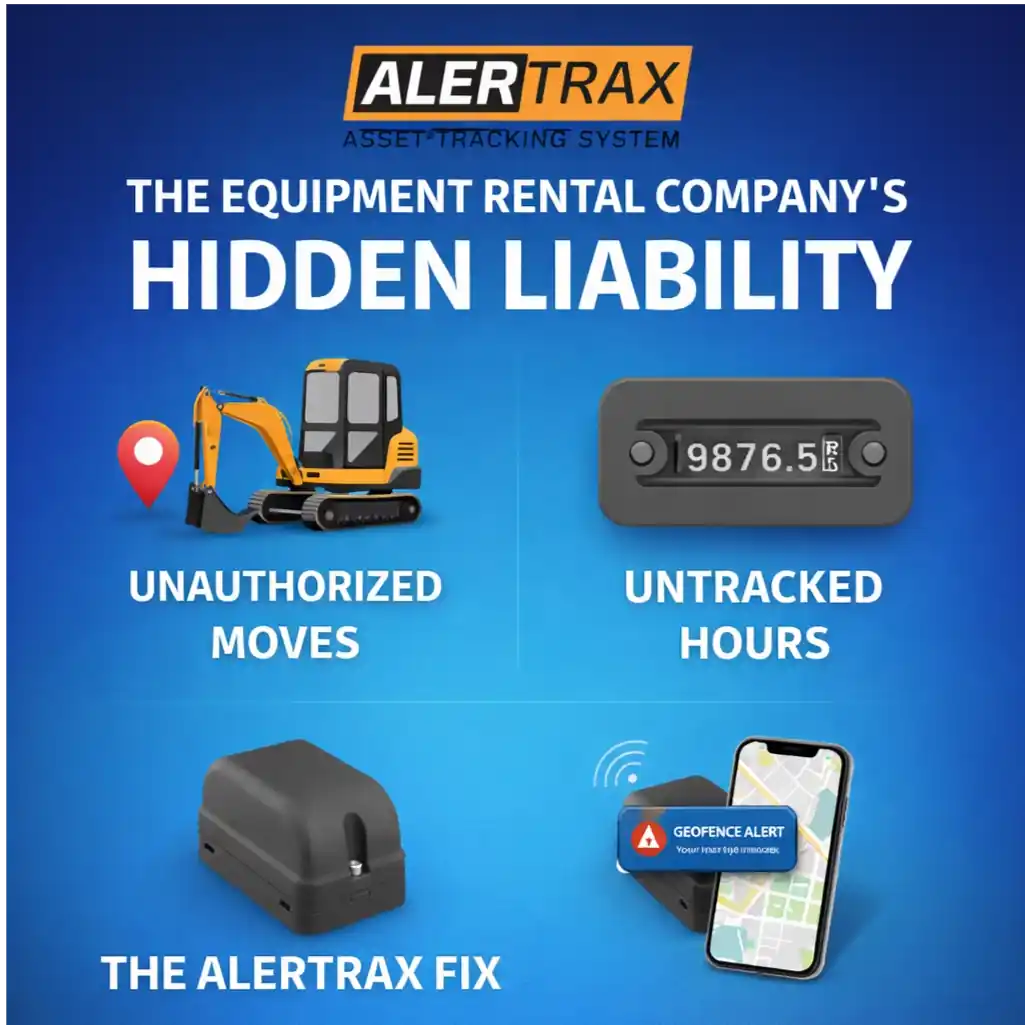
Equipment rental is a margin business. The machines in your fleet are only making money when they are out on rent. When they are sitting idle, lost, stolen, or tied up in a dispute, they are costing you money instead.
Most equipment rental companies manage this with a combination of rental agreements, phone calls, and trust. That system works until it does not. And when it fails, it fails expensively.
GPS tracking changes the equation. It gives rental companies live visibility into where every asset is, how it is being used, and whether it is where the customer agreed to keep it. That visibility solves three of the most costly problems in equipment rental simultaneously.
1) Utilization is the metric that drives rental profitability
Time utilization, the percentage of available days a piece of equipment is actually out on rent, is the primary driver of rental profitability. Industry benchmarks suggest healthy rental operations target 65 to 75 percent time utilization across their fleet.
GPS tracking supports utilization in two ways. First, it tells you exactly where underutilized equipment is sitting so you can recover it and get it back into the rental cycle faster. Second, it gives you engine-hour data that supports accurate billing and helps you identify machines that are being used far more, or far less, than the rental agreement anticipated.
Both of those data points translate directly into revenue.